Mama Mommy Mom Bruh Embroidery Review
As a designer who spends half the day troubleshooting stitch paths and the other half advising small business owners on what actually sells, I look at digital assets with a critical eye. It is easy to get swept up in flashy mockups, but the real test happens when the needle hits the fabric. Today, I am evaluating Mama Mommy Mom Bruh., a design file marketed toward crafters and sellers looking for quick, high-demand graphics. The product description highlights its versatility as an SVG, PNG, DXF, and EPS file for cutting machines, which immediately signals that this asset is designed for multi-purpose use—likely bridging the gap between vinyl cutting and machine embroidery workflows.
This review focuses on how Mama Mommy Mom Bruh. performs as a machine embroidery design. We will look at its visual personality, its suitability for specific embroidery projects, and the practical considerations you need to keep in mind before adding it to your craft business inventory or personal collection.
First Impressions: Mood and Visual Personality
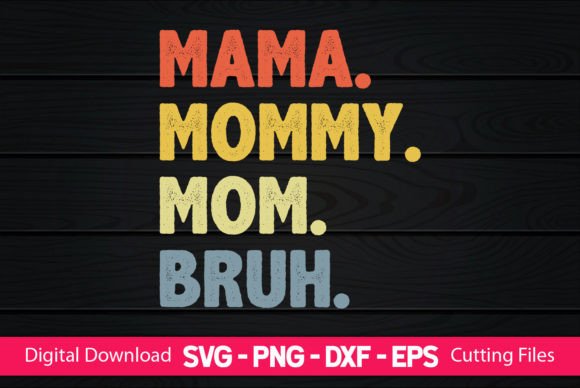
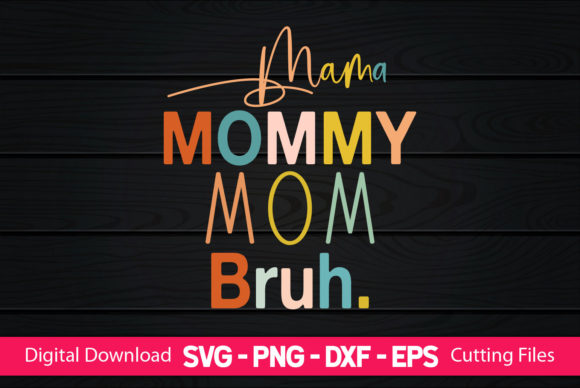
The title alone tells you everything you need to know about the target audience. This is not a subtle, minimalist piece of art; it is bold, playful, and heavily reliant on text-based appeal. When I first loaded the file into my digitizing software, the immediate takeaway was its potential for creating personalized gift items that resonate with modern family dynamics. The phrase "Mama Mommy Mom Bruh" suggests a humorous, inclusive take on parenthood, likely appealing to millennial and Gen Z parents who appreciate a bit of slang mixed with traditional roles.
Visually, designs like this rely entirely on typography. There are no complex pictorial elements to distract from the message. This makes it a strong candidate for sweatshirt embroidery or large-format tote bag design applications where the text needs to be the hero. The mood is casual, fun, and slightly irreverent. It feels right at home in a boutique that specializes in custom apparel for families, particularly those celebrating holidays, birthdays, or baby showers. If you are selling digital embroidery file assets, this design taps directly into the "funny mom" niche, which remains a consistent seller on platforms like Etsy.
Real-World Application: Where This Design Shines
In my experience, text-heavy designs perform best on structured garments and sturdy accessories. For Mama Mommy Mom Bruh., I see three primary use cases that would drive customer engagement:
- Holiday Gifts and Seasonal Merchandise: This design is perfect for holiday embroidery collections. Imagine a matching set for a mother and her children, or a funny gift for a brother ("Bruh") who is stepping into a new role. The broad appeal of the terms allows you to market this across multiple demographics during peak shopping seasons.
- Boutique Branding and Small Shop Products: For an Etsy seller or owner of a small shop product line, this design offers high perceived value with relatively low production complexity. A well-executed embroidered patch on a denim jacket or a custom apron can command a premium price point because it feels personalized and unique.
- Apparel Decorators and Custom T-Shirts: While often associated with heavier fabrics, this design translates well to high-quality cotton tees. The key here is presentation. Using a clean printable mockup that shows the texture of the thread against the fabric helps buyers visualize the final finished product.
The versatility of the source files (SVG, PNG, DXF, EPS) means you can also use this as a base for heat transfer vinyl (HTV) if you do not have an embroidery machine. However, for those focused on textile arts, the tactile quality of thread adds a layer of professionalism that vinyl cannot match.
Technical Considerations and Stitch Execution
Not all text designs are created equal. When evaluating Mama Mommy Mom Bruh. for actual stitching, several technical factors come into play. Because the design is text-dominant, the clarity of each letter is paramount. You must pay close attention to the stitch density. If the density is too low, the fabric may show through, making the text look cheap. If it is too high, the fabric may pucker, especially on lighter materials.
I recommend testing this design on various fabrics before committing to a production run. Start with a mid-weight cotton or a cotton-poly blend for custom apparel. Avoid extremely thin or stretchy fabrics unless you are using a heavy-duty stabilizer. The interaction between the thread colors and the fabric background is critical. Dark text on dark fabric can be lost, while bright colors on white fabric might pop too aggressively depending on the desired aesthetic. Always inspect the design in black and white mockups to ensure contrast levels are sufficient.
If the design includes any decorative accents or stylized fonts, check the hoop size requirements carefully. Tight curves in lettering can sometimes cause registration issues if the hoop is too small or if the fabric shifts during stitching. Using a proper stabilizer—whether cut-away for woven fabrics or tear-away for knits—is non-negotiable for maintaining sharp edges.
Where to Use Carefully
While this design has broad appeal, there are scenarios where it might not perform as expected:
- Small Hoop Sizes: If you attempt to stitch this on a very small area, such as a child’s sock or a tiny accessory, the text may become illegible. Ensure the design fits comfortably within your intended hoop size.
- Textured Fabrics: Materials like terry cloth or heavy fleece can obscure fine details. The embroidered patch effect might get lost in the nap of the fabric.
- Dense Stitch Areas: If the font uses thick fill stitches, be cautious about placing this on curved surfaces like caps. The bulk of the thread can make the hat uncomfortable or cause the design to distort.
- Frequent Washing: For items that will undergo heavy laundering, such as kitchen towels or baby clothes, ensure the design is stabilized properly to prevent unraveling over time.
Impact on Product Value and Customer Trust
From a business perspective, the quality of your embroidery directly impacts customer trust. A poorly stitched text design can make even a high-quality garment look amateurish. Conversely, a crisp, well-executed Mama Mommy Mom Bruh. design elevates the perceived value of the item. Customers are willing to pay more for handmade goods that demonstrate care and precision.
When listing this as a small shop product, focus on the emotional connection. Highlight how the design celebrates family bonds with a touch of humor. Use high-resolution images that show close-ups of the satin stitch or running stitch details to prove the quality. This transparency builds confidence and reduces return rates.
Practical Designer Notes for Implementation
Before you start producing, follow these steps to ensure success:
- Test on Scrap Fabric: Never skip this step. It saves time and material in the long run.
- Check Licensing: Since this is sold as a digital file, verify whether you have commercial rights to sell finished items. Most platforms require clear licensing terms for commercial embroidery.
- Review File Formats: Confirm that the included formats (SVG, PNG, DXF, EPS) are compatible with your specific workflow. Some designers prefer converting SVGs to DST or PES for embroidery machines.
- Inspect Small Details: Zoom in on the letters. Are there any awkward overlaps or gaps? Adjust the spacing if necessary.
- Compare Backgrounds: Test the design on both light and dark fabrics to see how the thread colors interact.
Ultimately, Mama Mommy Mom Bruh. is a solid choice for designers looking to tap into the popular family-themed market. It is versatile, emotionally resonant, and visually straightforward. By paying attention to the technical details—stitch density, stabilizer choice, and fabric compatibility—you can turn this digital asset into a profitable, high-quality handmade product that customers will love.
Whether you are an Etsy seller expanding your catalog or a hobbyist making a special gift, this design offers a great balance of creativity and commercial viability. Just remember: the devil is in the details, and in embroidery, those details are made of thread.